One year ago, I joined the JAC introductory alpinism course. That was my first contact with climbing and glaciers, and I immediately felt captivated by the freedom and adrenaline of these activities. After the course, I bought an alpinism rope and started practicing with Chus and Nora. So when Sara announced the JAC intermediate alpinism course in January, we registered right away. The course followed the same structure as the introductory one—one weekend on the glacier and another on rocky terrain—but quoting Davide: “tutto un po’ più avanzato”.
First weekend – Glacier Terrain
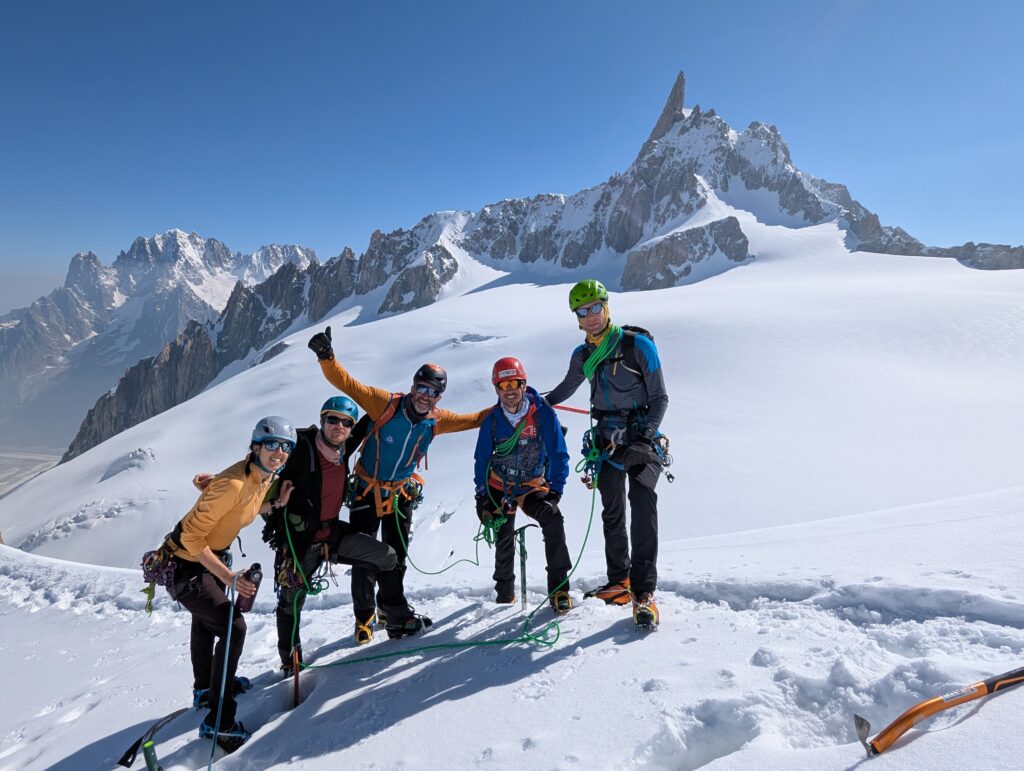
For the first weekend, we headed to Rifugio Torino in the Mont Blanc Massif, the mecca of alpinism. We had been a bit nervous in the weeks before, and we trained properly our cramponage in Alpe Devero and Sempione. I even bought a new pair of boots for the occasion! We were a group of five – Nora, Chus, Marek, Giona, and me – guided by Davide. I was teaming up with Marek.
The plan for the first day was to climb an “easy” ridge to acclimatize and then practice crevasse rescue maneuvers. The ridge chosen was the Aiguilles Marbrées (PD+), a classic route close to Rifugio Torino, perfect for newcomers—and therefore usually very crowded. Conditions change a lot: early in the season it’s a snowy ridge where crampons are essential, while later it can be almost entirely rocky.
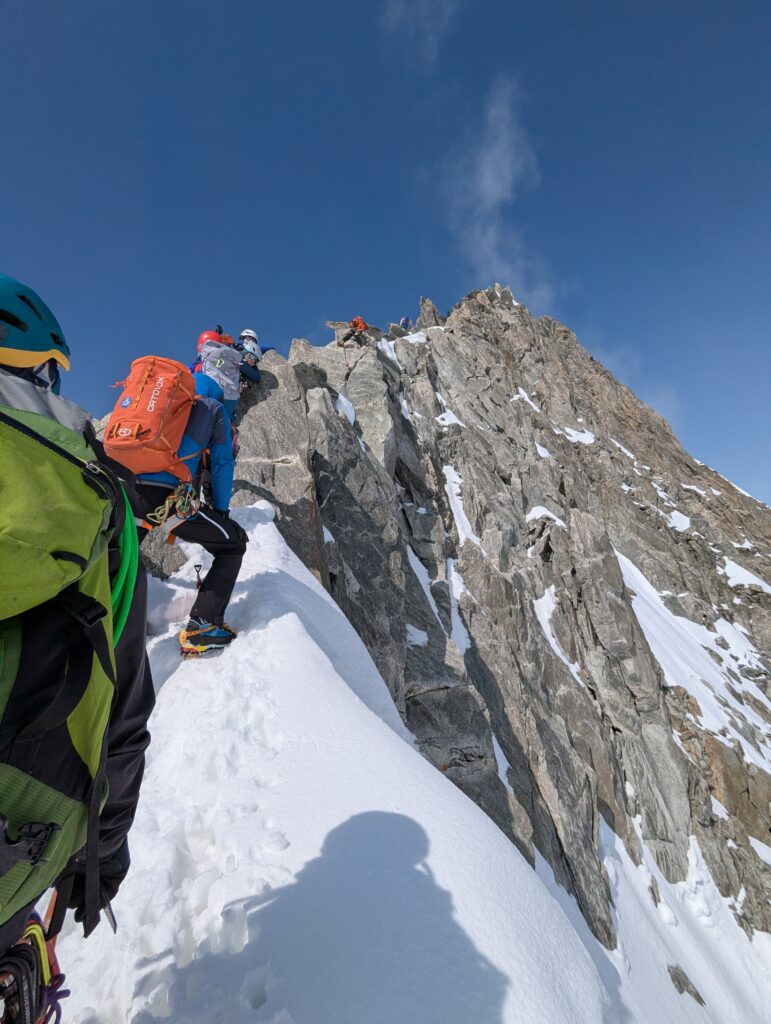
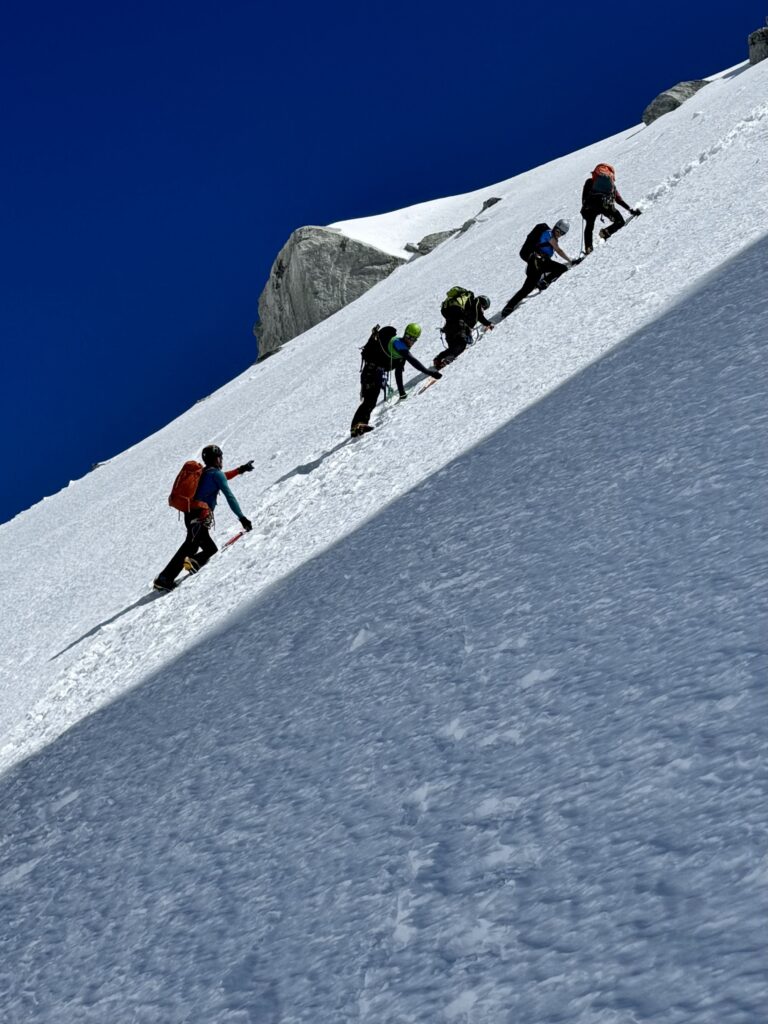
The day was sunny, the ridge was full of snow, and we all felt confident and enthusiastic. The route starts at Col de Rochefort with an initial uphill section of mixed terrain, followed by a horizontal traverse exposed on both sides, and ending with a rappel back onto the glacier. When we started the uphill section, as expected, there were many teams in front of us, so we had to queue on all the technical parts. During one of these stops, I heard a French guide shouting at his team to sit down in the middle of the horizontal traverse because of the strong wind. That put me on high alert. When we finally reached the traverse, my worst fears were confirmed: the wind gusts were very strong (later at the hut we saw that they peaked at 70–90 km/h), the traverse was very exposed, and in many sections there was nothing on either side to plant the ice axe. It was the scariest experience I’ve ever had in the mountains. Slowly, and not always very elegantly, we managed to reach the end of the traverse, where we were finally protected by a big wall that we all hugged like it was our long-lost best friend. Shortly after, we reached the end of the ridge. All that remained was the rappel back to the glacier. However, at least five teams were waiting ahead of us, which Davide estimated meant a two-hour wait in freezing wind gusts. After assessing the situation, he decided the only option was to return. That meant doing the windy traverse again! I asked Davide for advice on how to deal with the wind gusts on the traverse, and he said: “The only strategy is to go as fast as you can, without hesitation” I followed his advice, and I must admit it felt easier the second time, I even enjoyed it feeling, once more the surge of adrenaline. There are no pictures from that traverse—not even Davide, who is always joking and snapping photos, dared to take out his phone.
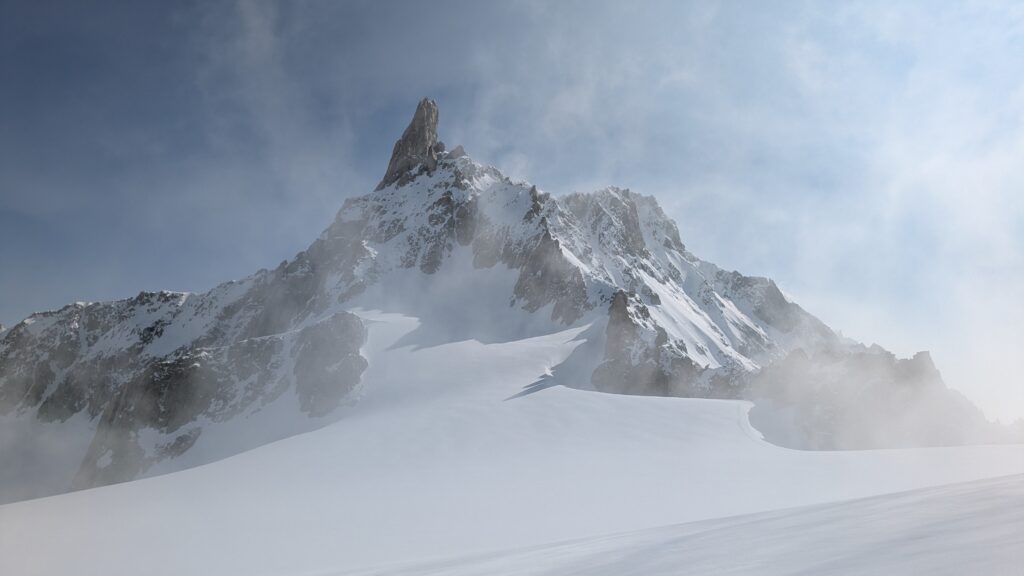
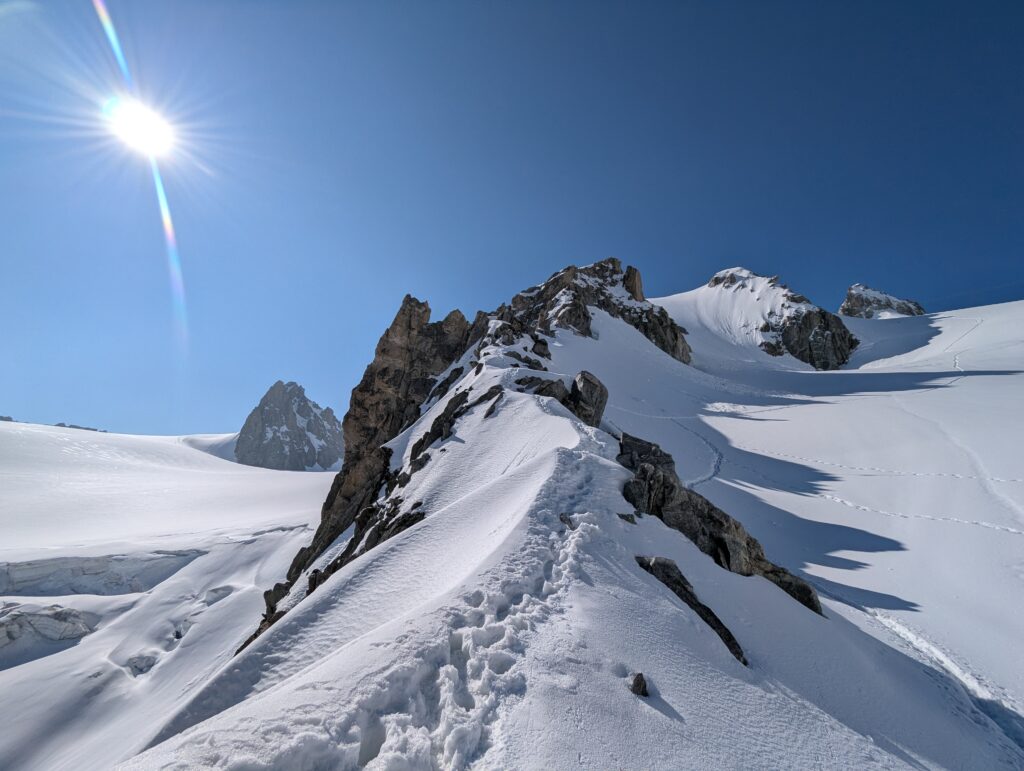
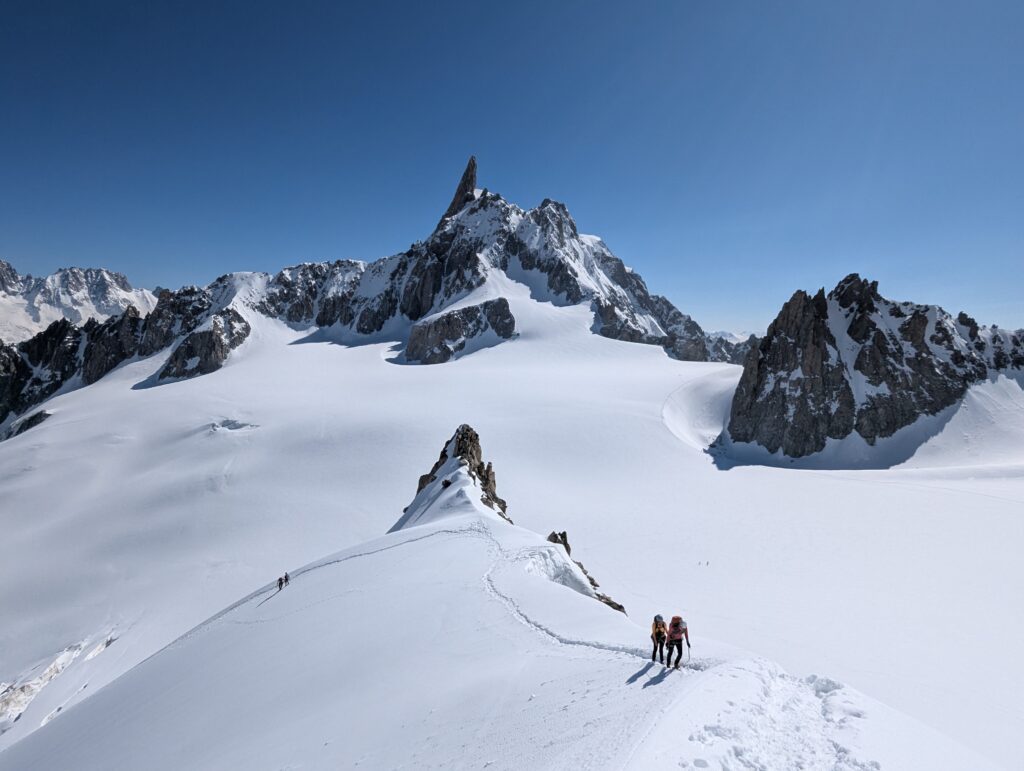
The original plan for the second day was to climb the Couloir Gervasutti to Tour Ronde (AD). Despite having watched tons of videos of the couloir in the days before, we had to cancel it. The recent snowfall and strong winds had made the avalanche risk too high. Instead, we headed to the North ridge of Petit Flambeau (PD+). This time the weather was perfect: sunny and calm. We enjoyed a beautiful approach through the glacier, followed by an easy ridge with panoramic views of the Dent du Géant.
Indeed, it felt a bit too short and easy, so at the summit we decided to try something else. Chus spotted a snowy mountain ahead that a couple of alpinists were climbing. After consulting with Davide—who replied with his classic “Why not?”—we set off for the Aiguille de Toula. We climbed it via the steep and snowy east face, which was quite straightforward with knee-deep snow. On the summit, Davide decided to descend the west face, traversing the mountain. The west face was still frozen at that time of day and included a steep 40–50° section. And one of the first things you learn in the course is that descending is always more difficult than ascending, both on rock and on crampons!. This, combined with the headache I had from the night at Rifugio Torino, made the descent quite challenging. But slowly, and thanks to the old-school steps cut by Davide, we made it back safely to the glacier.
Second Weekend – Rocky Terrain
For the second weekend, we changed guides and we were leaded by Luca. Marek couldn’t join either, so I roped up with Giona. After discussing and discarding options such as Pizzo Andolla, Cresta Segantini, or Pizzo Badile (all of them still on my to-do list), Luca proposed to return to the Aosta Valley.
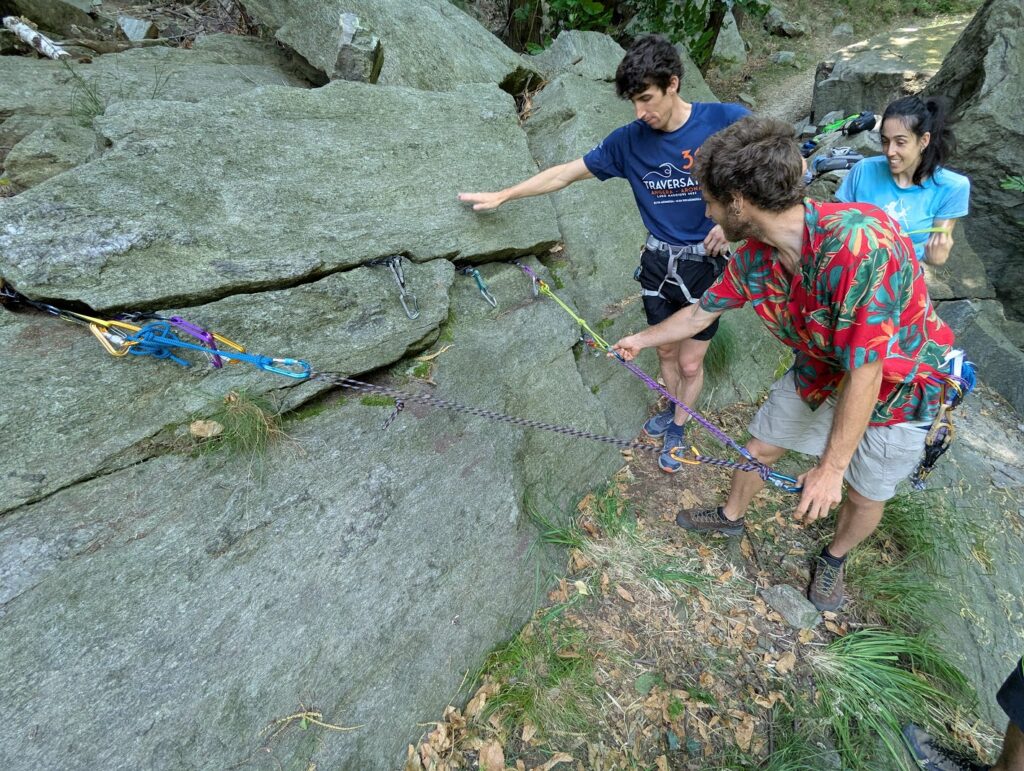
The first day was a theory class at the Outrefer crag, near Bard. This is a nice crag for intermediate-level climbers in summer, thanks to the shade and the nearby river where you can enjoy a post-climbing dip. We spent the day learning all the different types of trad anchors you can build with cams, as well as rescue manoeuvres. After the theory, we climbed the two easiest routes on the crag, a 5c and a 6a. After the climb, we enjoyed the promised dip in the river and then headed to the “sophisticated” Courmayeur for dinner. According to Nora: “Este es el tipo de alpinismo que me gusta!”
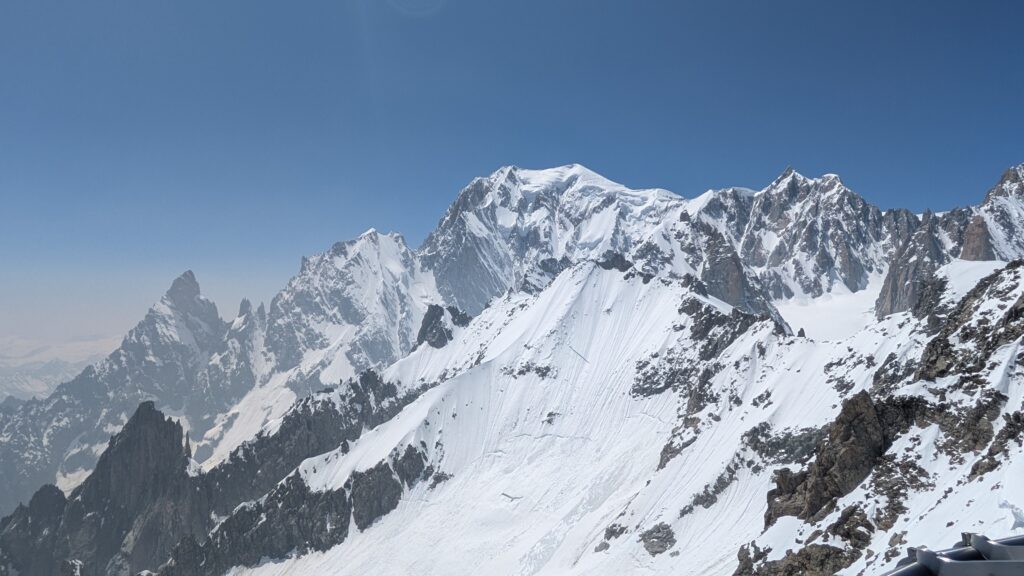
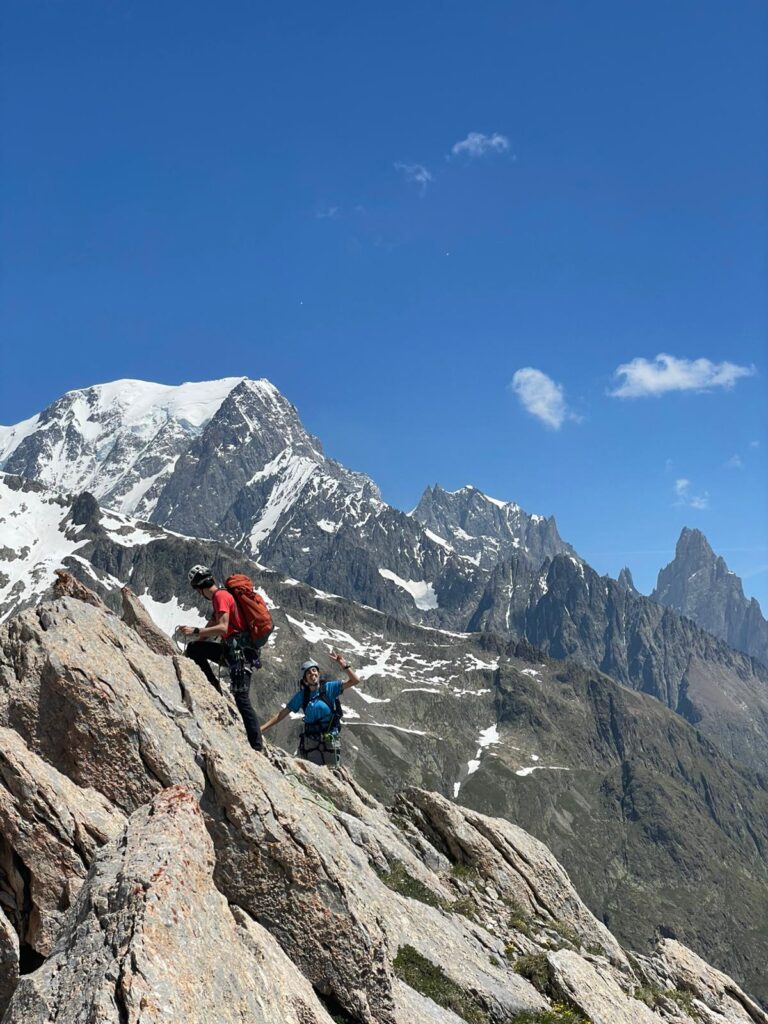
On the second day, our plan was to climb the NE ridge of the Pyramides Calcaires in Val Veny. The mountain takes its name from its rock type, a kind of outlier in the kingdom of granite and gneiss. I have bittersweet feelings about that day. On the one hand, the rock quality is good, and the views during the climb—of Mont Blanc, Petereuy and Inominata ridges—are always amazing. The climbing is a bit exposed at times, but never too difficult, a perfect place to gain confidence in alpine terrain. On the other hand, the approach is a 6 km wide path full of people, which was particularly tedious on the way back. It feels as if that road, and some of the people you meet on it, don’t belong there.
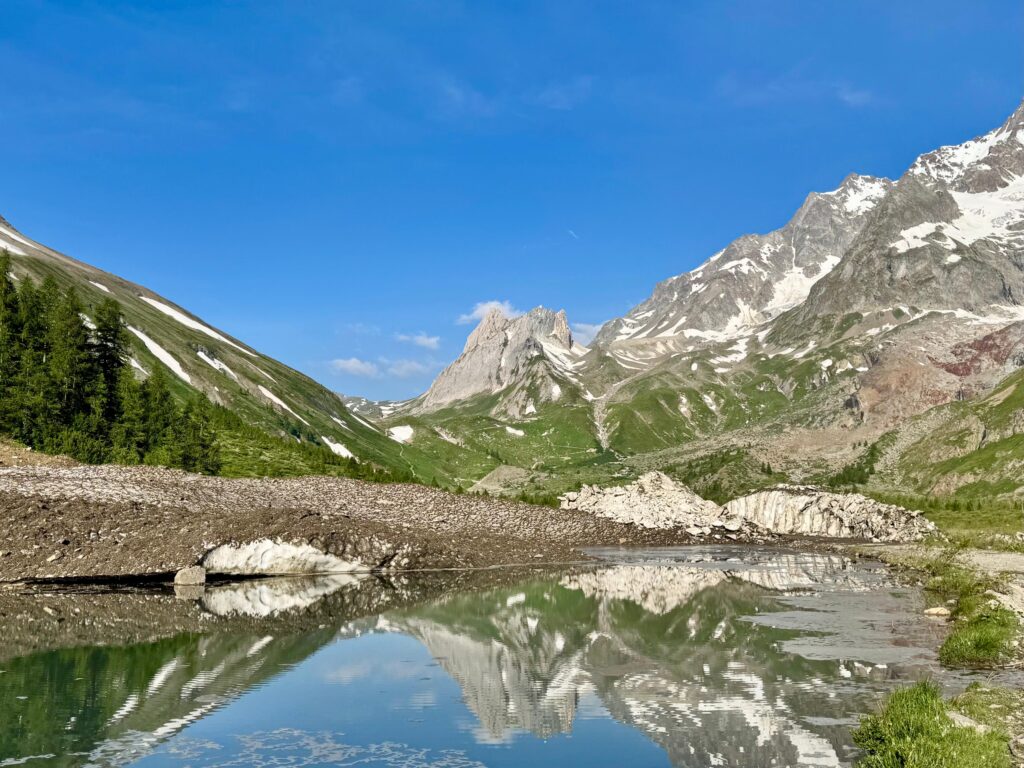
The trip ended with a refreshing dip for our legs in the river flowing down from the glacier, and a failed attempt to try the best gelato in the Aosta Valley, according to Luca (Agrigelateria Agrimont, Pont-Saint-Martin). Another good excuse to go back to the Aosta Valley 🙂
JAC members: Marek, Chus, Nora and Ruben.
Author: Ruben