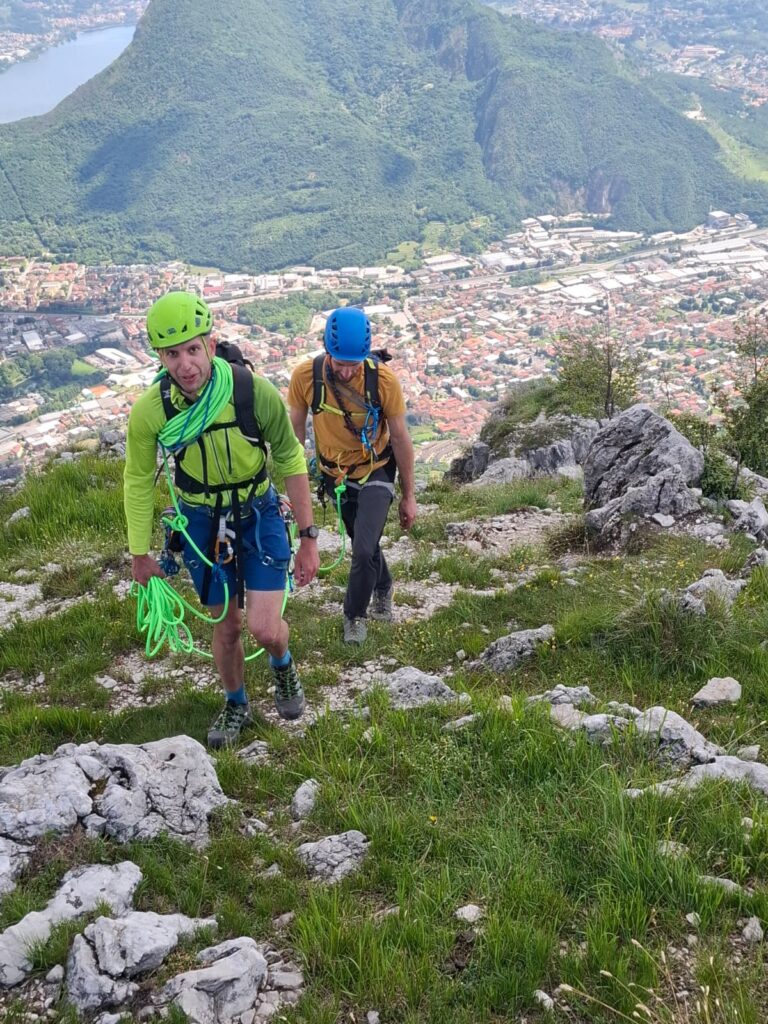
One of my goals since completing the JAC introductory alpinism course, and after my first visit to the Grigna group, has been to climb the Segantini Ridge. Most guides and blogs recommend training on Cresta OSA to the Moregallo and Cresta Ongania beforehand, so with that goal in mind, I convinced Victor to join me in this adventure. We were also accompanied by Gema and Miguel, who hiked to the summit to meet us there.
It was a special day because it was Victor’s very first experience on an alpine route. That meant I felt responsible for leading the team safely. On the other hand, he is a much stronger climber than me, so I knew I could play the “Victor wildcard” if we came across a tough climbing passage.
We left Ispra for Valmadrera at 8:00, stopping at Pasticceria Fumagalli in Arosio for a second breakfast, as recommended by the ProUp guides. Something I learned during the JAC courses is that good alpine guides know just as much about local bars as they do about the mountains. Another lesson as important as the previous ones is that morning coffee and post-climb beers almost guarantee traffic jams—both on the route and on the drive home.
The approach involved +600m of elevation gain, which we covered in 1h30. The day was humid, and we reached the start of the route already sweaty. Only one party was ahead of us. The leader was explaining how a Reverso works and how to tie a clove hitch, so I urged Victor to skip our break and start right away to avoid getting stuck behind them. Despite the couple’s unkind look, it turned out to be a wise decision—we had the climb entirely to ourselves, while later we learned that Marek and Ilaria, who were also on the route that day, got stuck in the traffic jam created by those two.
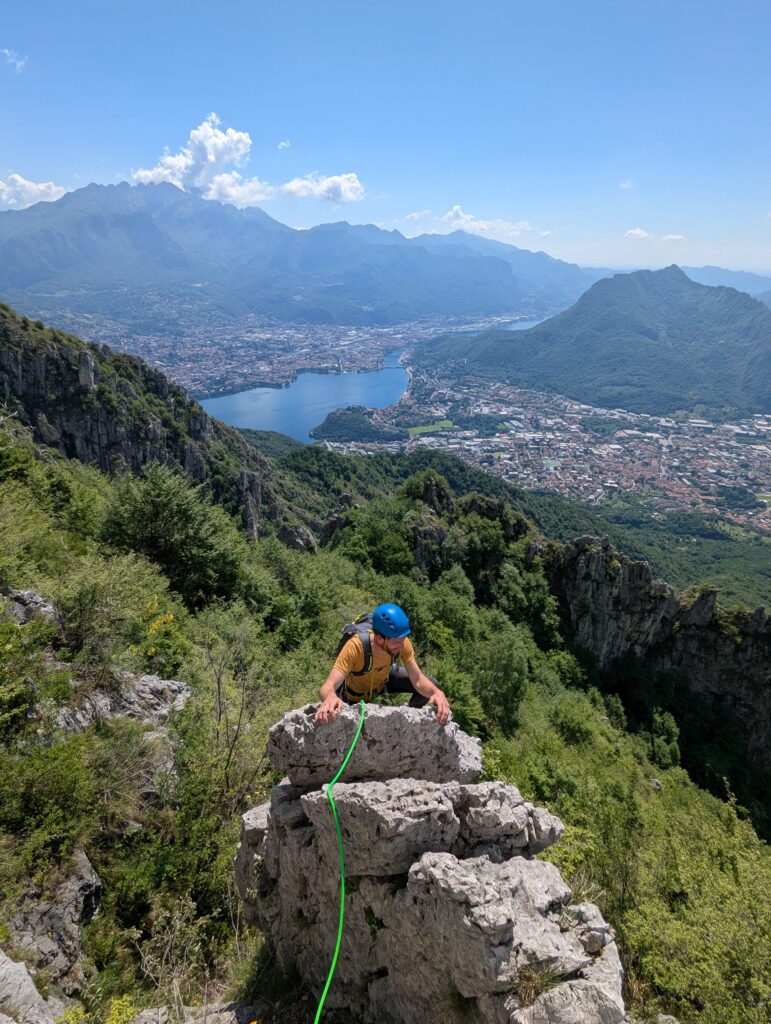
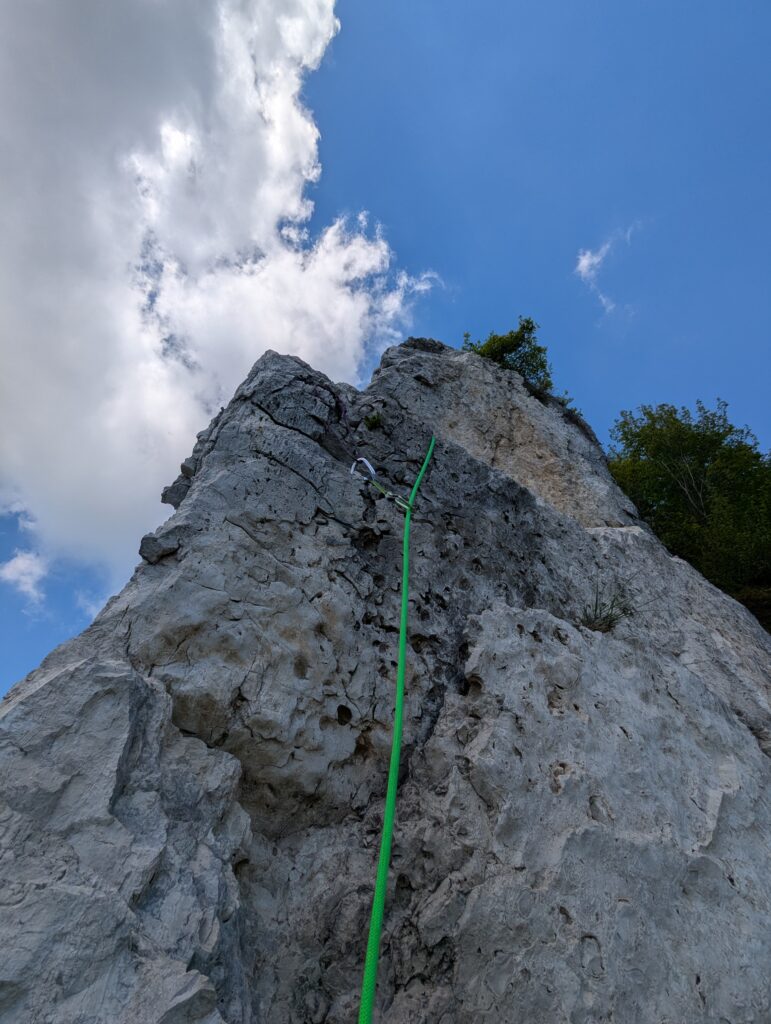
The Cresta OSA is divided into two sections. The first is usually described as 7 pitches, though they’re not typical pitches. The route has no bolted belays, and there are only about four bolts in total. Instead, the ridge is full of spuntone and clessidre, perfect for practicing sling placements for protection. We also brought cams, but they weren’t very useful. For beginners, the safest option is to follow the pitches strictly, which increases security but takes longer. For more experienced climbers, it’s an excellent route to practice progressing in conserva, reserving pitched climbing for the harder spots: a short wall in pitch 2, a slab in pitch 4, and a chimney in pitch 5. We opted for the beginner style.
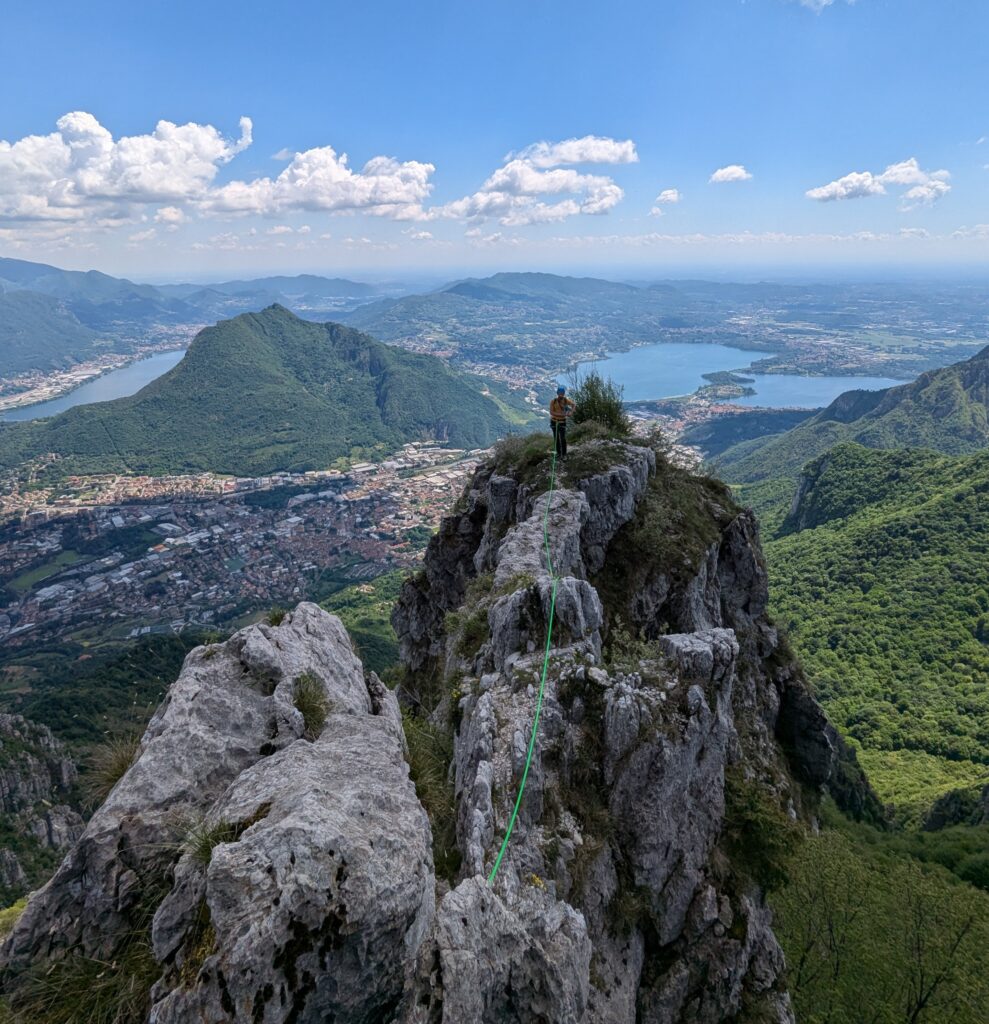
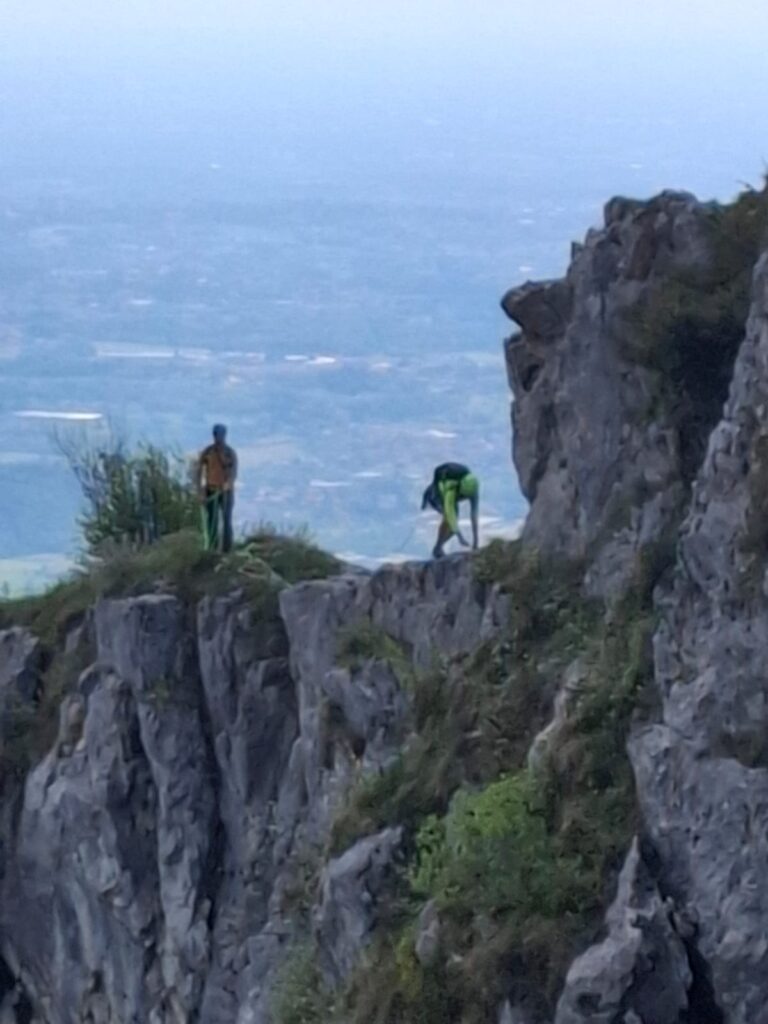
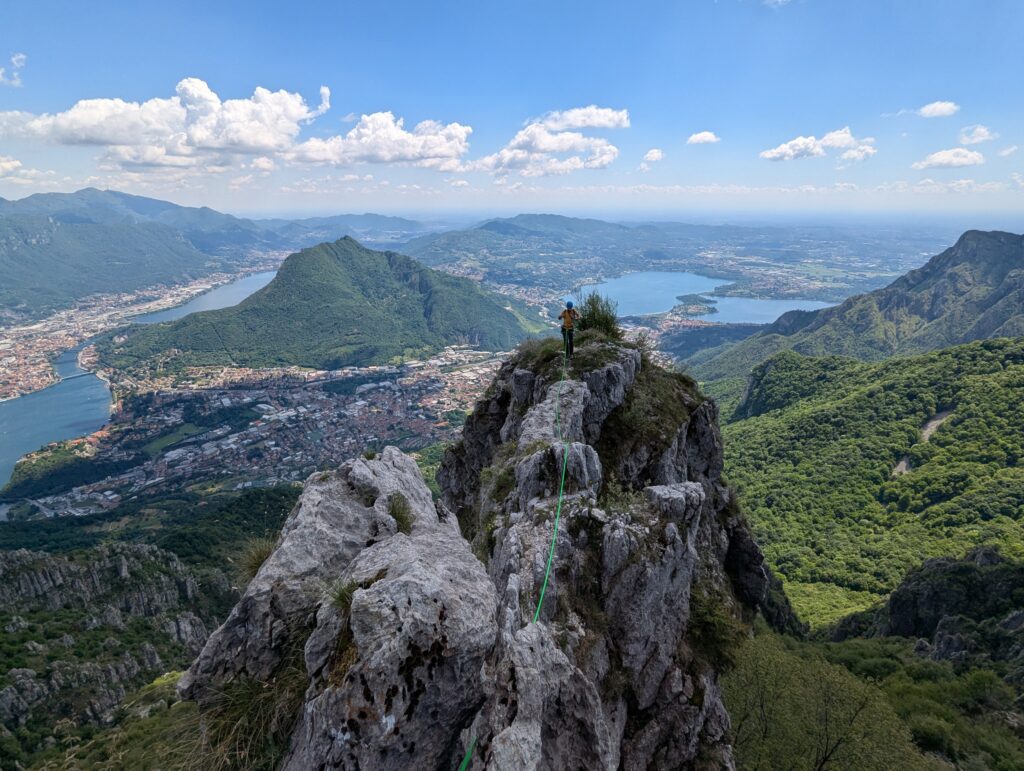
At the top of the first part a path appears on the right were you could reach easily the top of Moregallo walking. However, there is also the possibility to tackle the second part, divided normally in 3 ptiches. I would not recommend this part for beginners, because rock quality is bad and many sections are difficult to protect. This section is for those who want “adventure”. The first pitch is a 5-m wall with no bolts, easier to the left. The second is a 30m scramble through loose rock and dirt, no protection possible. The third is the famous rock bridge. Victor and I started across it very confidently, but we both ended up using our hands, as the pictures below prove.
After four hours of climbing, we reached the summit of Monte Moregallo, where Gema and Miguel were waiting for us. Together we descended via the panoramic (but long) East Ridge. Afraid of the typical Lecco traffic jams, we skipped the post-climb beer stop—though in the end, we still got stuck in traffic… and without a beer.
- Grade: AD (max climbing grade IV, normally around III)
- Climbing equipment: 50-m rope, 6 quickdraws, 4 slings, a set of cams (optional), approach shoes.
- Total duration: 7h 30min (4 hours roped)
- Comments: the ridge is normally crowded. If going on a weekend, better to start early.
- Topo: https://www.scuolaguidodellatorre.it/relazioni/Moregallo-viaCrestaOSA/153/
JAC members: Miguel, Gema, Victor and Ruben.
Author: Ruben